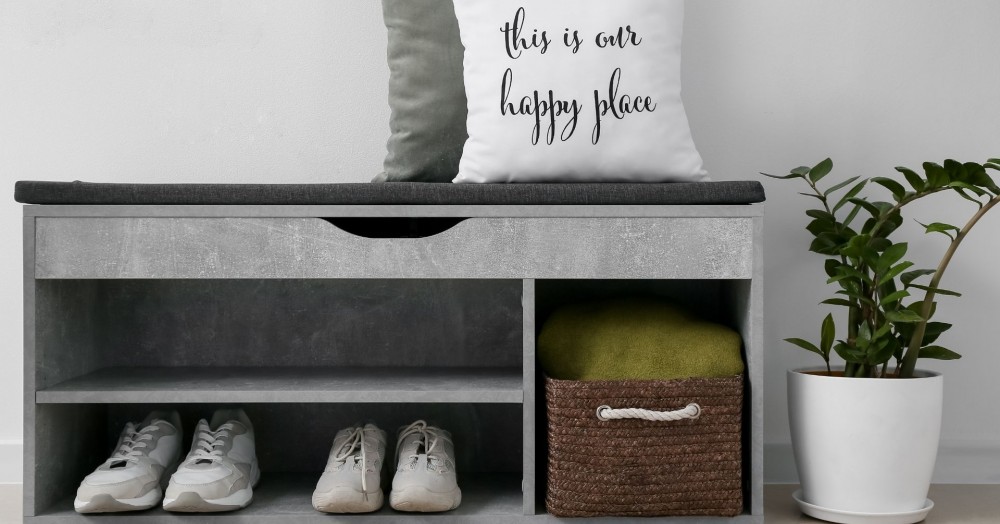
Staged hallways sell homes
It’s time to give your hallway some attention. As a buyer steps into a home, in their mind that first view of home must be something they want to come home to, every day. If they are put off in the first few steps, what chance do you have? Many forget the entrance hall when staging a home, considering the kitchen, bedrooms, living room more important, but we’re here to say a well-staged hallway can sell a home. It’s time to give it a spruce!
1. Clear the clutter
This tip may seem obvious, but you need to create the sensation of space in the hall, so be ruthless and limit each family member to one coat and one pair of shoes in the hall. Make sure you put your bike in storage and clear that build-up of junk mail. Use hooks on the wall or tuck coat racks under the stairs, if possible, to maximise the space.
2. Keep paint pale and neutral
Unless you have an impressively large, period hallway that can carry off traditional, darker paint colours, keep the walls of your hallway pale and neutral. Neutral colours help people to imagine their own furniture in the space and pale colours make the room appear larger. Keep ceilings white. Try painting the baseboards the same colour as the floor to make the floor space appear larger.
3. Keep it light and bright
There is a reason that estate agents will describe a property as “bright” – dark homes simply don’t sell as fast, so take the time to think about the lighting in your hall. If the ceiling is high use a pendant light, but if the ceiling is lower use an uplighter. If the front door does not have a window in it, would it be possible to change the door for one with glazing, or could interior doors with glass add light from other connecting rooms?
4. Flawless floors
In a hallway, people’s eyes are drawn to the floors so make sure they are worthy of inspection. Again, keep colours neutral. Wooden flooring is most popular while stone or Victorian tiles are popular in period properties. Sisal or coir carpets are also popular, but make sure that the carpets are meant for high-wear areas so that they can withstand the traffic. Also make sure you have doormats inside and out so that your prospective buyers don’t wreck your efforts to maintain a top-notch floor with mud and rain.
5. Depersonalise the hall
Get rid of any family photos. The buyer needs to be able to picture themselves living in the home, so keep pictures to a minimum. Instead, hang a mirror on the wall, so that when buyers enter the space, they are literally seeing themselves in your home. The mirror also reflects light and creates a sense of space.
If you’re ready to put your home on the market or are thinking about how best to stage it for when you do, get in touch! We can give you bespoke advice on your home to get it sold for the best price.